
Biography
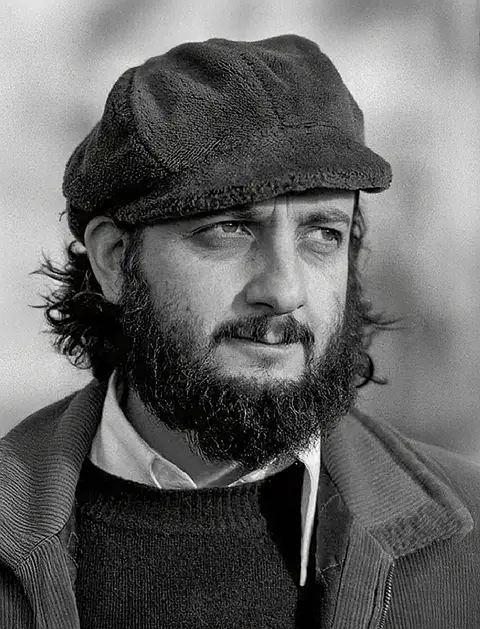
Sergio Ortega Alvarado
(1938-2003)
A Franco-Chilean composer born in Antofagasta, Sergio Ortega studied composition at the Conservatorio Nacional Superior de la Universidad de Chile under the guidance of Gustavo Becerra-Schmidt, after having been a student of Roberto Falabella.
In 1964, he joined the Instituto de Teatro de la Universidad de Chile, where he met Pablo Neruda. The celebrated poet asked him to write the stage music for Shakespeare’s Romeo and Juliet, for which Neruda had produced a versified Spanish translation. This collaboration marked the beginning of a close and fruitful artistic relationship between the two men.
In 1969, Sergio Ortega became a professor of composition at the University of Chile Conservatory. The following year, he assumed artistic direction of the University of Chile’s television channel (Canal 9). He held both positions until the military coup of September 1973, which forced him into exile.
Welcomed in France by the city of Nanterre, he met Pierre Debauche, director of the Théâtre des Amandiers. A long collaboration followed, during which Ortega composed music for numerous theatrical productions.
From 1982, Sergio Ortega directed the École Nationale de Musique de Pantin (today the Conservatoire Jacques Higelin), a position he held until June 2003. He died shortly thereafter, on September 16, 2003, in Paris.
A committed composer, Sergio Ortega wrote famous militant songs that became emblematic anthems of the struggle for democracy, notably “Venceremos” (“We will prevail”), the anthem of the Popular Unity led by Salvador Allende, as well as « El Pueblo Unido jamás será vencido » (The People United Will Never Be Defeated). These songs of resistance against fascism continue to be sung and performed around the world.
The musical production of Sergio Ortega is remarkably diverse, encompassing chamber music, symphonic works, and ten operas. On the occasion of the bicentenary of the French Revolution, he composed three operas commissioned by three different cities.
A close collaborator of Pablo Neruda, he set several poems by the renowned writer to music, notably « Los Cantos del Capitán », taken from the cycle « Los Versos del Capitán », dealing with love and exile. At Neruda’s request, he also composed the music for Neruda’s only theatrical work, a dramatic cantata entitled « Fulgor y Muerte de Joaquín Murieta » (Splendour and Death of Joaquín Murieta), premiered in 1967 in Santiago in the presence of the poet. Sergio Ortega later developed this work into an opera, premiered in 1998 at the Teatro Municipal de Santiago, and later revived in 2003 at the Savonlinna Opera Festival in Finland.
Sergio Ortega was honored as « Embajador Cultural de la Unidad Popular » (Cultural Ambassador of the Popular Unity), a « Hijo ilustre » (Distinguished Son) of the city of Antofagasta, and was a recipient of the « Order of Friendship of Peoples (USSR) ».